

EXPORT AND IMPORT PROHIBITED ITEMS FOR ALL DELIVERY METHODS
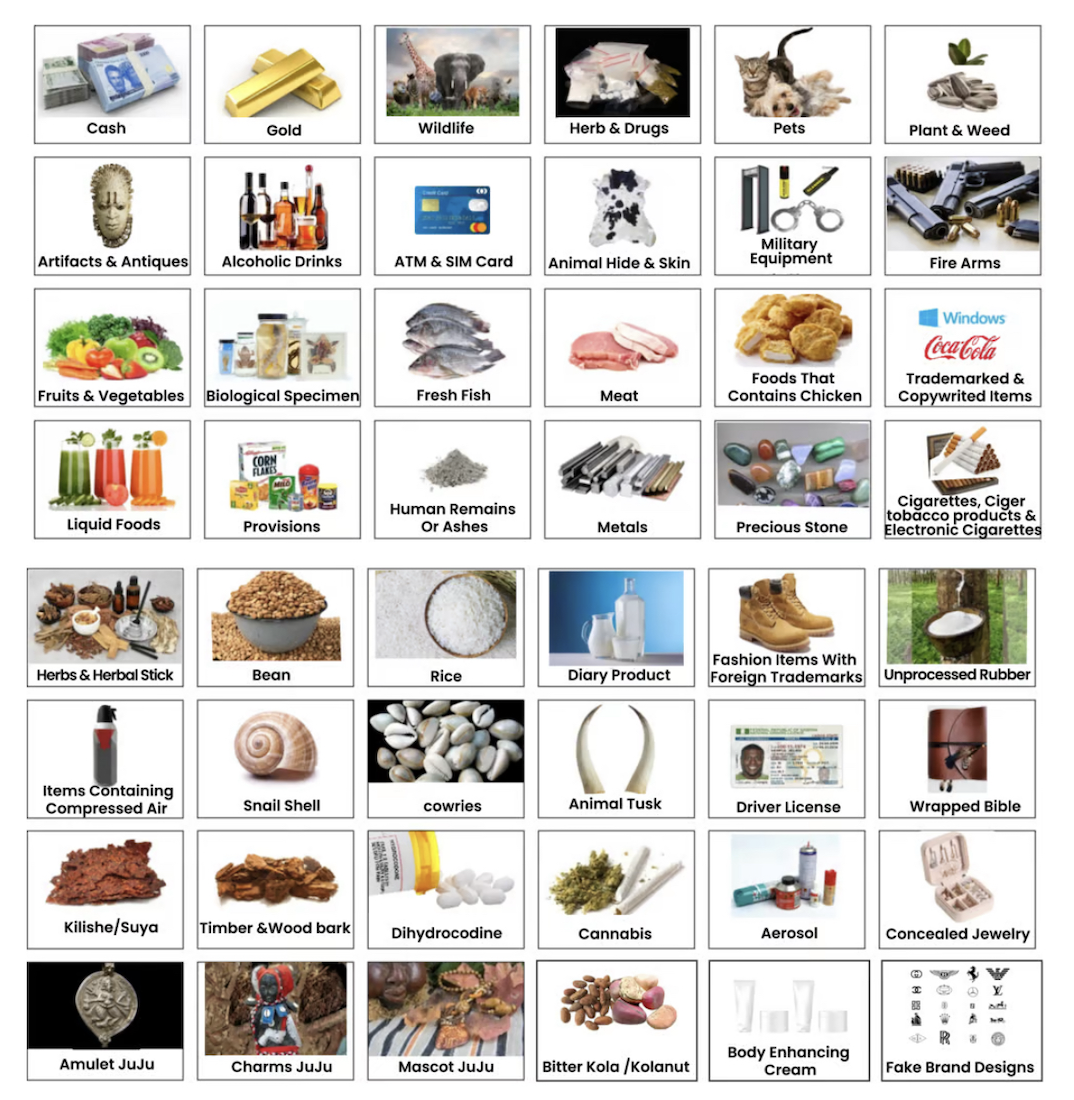
Prohibited items cannot be shipped from a country or transported into a country. These items are restricted from being exported via any of our shipping methods.
Whether you are shipping for personal use or commercial purposes, you must know the items or products you can’t ship from Nigeria to other countries or that are restricted, which means specific documents are required to ship certain items.
We recommend you check with us before shipping if you doubt whether your products are allowed into the destination country.
WE DO NOT SHIP ITEMS ON THE PROHIBITED LIST.
EXTRA PROHIBITED ITEMS FOR CARGO DELIVERY TO UK

Lithium Batteries
Lithium Batteries are classified as Dangerous Goods.

A wide variety of electronic goods powered by Lithium Batteries fall under the Dangerous Goods Regulations, regardless of whether they are rechargeable (Lithium Ion) or non-rechargeable (Lithium Metal).
Lithium Batteries that are known or suspected to be defective, damaged or recalled present a high safety risk to personnel and property, and are not permitted on aircraft under any circumstances.
When it is known or suspected that a defective, damaged or recalled Lithium Battery is enclosed within a laptop, mobile phone or other device, the battery must be removed before we can accept the shipment.
When the battery is not defective and it is enclosed in a gadget, we can ship it — but just 2 items per waybill.
Dangerous/Hazardous Goods
Dangerous goods (also known as hazardous material or hazmat) are any substances or materials that are capable of posing an unreasonable risk to health, safety, and property.

These include but are not limited to:
Perfumes
Aftershaves
Aerosols
Flammable substances
Dry ice
Biological substances
They also include UN-classified dangerous goods and any goods specified under:
International Air Transport Association regulations (IATA)
Agreement on Dangerous Goods by Road (ADR)
International Maritime Dangerous Goods (IMDG) regulations
Goods with these characteristics are considered dangerous (list not exhaustive). Even electronic equipment, perfumes, and food flavoring may be classified as Dangerous Goods.
Some materials or chemicals may become harmful under specific circumstances and are prohibited.
NB: If you are not certain if an item belongs to the class stated above, kindly ask for the Material Safety Data Sheet (MSDS) for the item from the customer.
Note: The list is non-exclusive and may be updated from time to time by customs. You are therefore advised to visit the link below:
🔗 https://customs.gov.ng/?page_id=3075
ITEMS REQUIRING SPECIFIC PACKAGING AND DOCUMENTS
Fish – Must be packaged with a maximum shipment weight of 20 kg per waybill.
Snail and periwinkle – (aside from Australia and the USA) must be packaged with a maximum shipment weight of 2 kg per waybill, and must each go with its own waybill.
Food items to European countries and Australia – Must be commercially packed.
Food items to the USA – Must go with a proper phytosanitary certificate (not photocopied or handwritten), issued by the appropriate authorities.
Eyeglasses & lenses – Must go with a Drop Ball Test Certificate.
Medications – Must go with:
Medical report
SSN number of the receiver or copy of passport data page
Personal medical form
Artwork & Artefact – Must go with a museum certificate.
Branded food items – Must go with an FDA certificate.
All shipments going to European countries – Must include a purchase receipt and proof of payment.
Bottled water – Must be packaged with a maximum quantity of 3 bottles per waybill.
